What Happens if Your Radon Mitigation System Fails? Madison Homeowner Guide
When you invested in a radon mitigation system for your Madison area home, you did it to protect your family’s health. Radon is a radioactive gas and a leading cause of lung cancer, so keeping levels low is not optional.
But what happens if your radon mitigation system stops working the way it should? Will radon spike overnight? How do you even know there is a problem?
At BreatheWell Radon Solutions, we design, install, and service radon mitigation systems across Madison and surrounding communities. Here is a clear guide to what really happens when a system fails, how to spot warning signs, and what to do next.
What Your Radon Mitigation System Is Supposed To Do
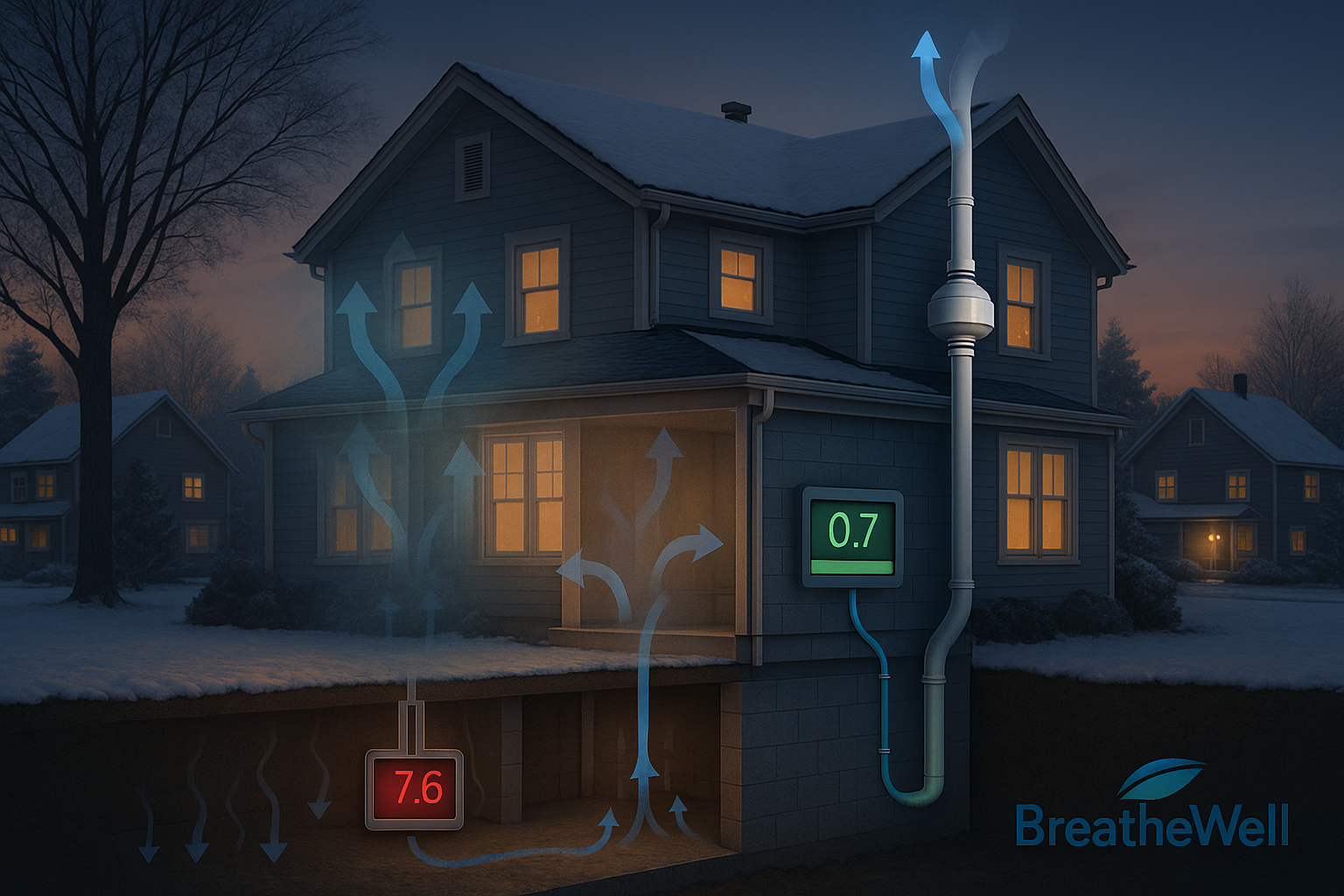
Most Madison homes use a sub slab depressurization system. In simple terms, the system:
- Pulls radon gas from under your foundation
- Vents it safely above the roofline
- Creates a pressure difference so radon is less likely to enter your home
When the fan is running and the system is designed correctly, it continuously reduces radon levels. With modern technology, most homes can be brought down to around 2.0 pCi/L or lower, which lowers long term health risk.
What Happens When A Radon System Fails
If your radon mitigation system fails, your home usually does not become dangerous in minutes. What happens is more gradual but still serious.
Radon Levels Drift Back Toward Original Levels
Without a working fan, the system is no longer actively pulling radon from the soil. Over time, your indoor levels often rise toward the levels you had before mitigation, especially in lower levels and basements.
How quickly this happens depends on:
- Your home’s original radon level
- The tightness of your foundation
- Seasonal conditions and how often you open windows
Because radon is colorless and odorless, you will not be able to feel this change. Only testing or monitoring will show it.
Long Term Exposure Risk Increases
Radon is the second leading cause of lung cancer in the United States after smoking. The danger comes from breathing elevated levels over months and years, not days.
If your system fails and levels stay high:
- Your long term lung cancer risk increases
- Family members who spend more time in lower levels, such as kids in a basement playroom or someone working from a lower level office, may be at greater risk
If anyone in your home smokes, the combined risk from smoking and radon is much higher than from either one alone.
Common Signs Your Radon Mitigation System Is Not Working
The good news is that most system failures give you clues before they become long term problems.
1. The Fan Is Silent Or Much Louder Than Usual
Outdoor radon fans are designed to run quietly. If you walk by the fan and:
- Do not hear it at all, or
- Hear grinding, rattling, or a new loud noise
then the fan may be failing or already stopped.
2. Manometer Reading Is Off
Most systems in the Madison area have a U shaped manometer on the pipe, often in the basement or garage. This small gauge shows whether the fan is creating suction.
- Two fluid levels at the exact same height usually mean the fan is not pulling air
- A reading very different from your usual baseline can signal a change in performance
If you are not sure how to read your manometer, BreatheWell can walk you through it or label normal ranges at your next service visit.
3. Elevated Radon Test Or Monitor Reading
If you use a continuous radon monitor or do regular short term tests, a sudden jump in radon levels is a major warning sign that the system is not doing its job. EPA and CDC recommend taking action if levels are at or above 4.0 pCi/L, and to also consider action between 2.0 and 4.0 pCi/L.
4. Visible Damage To Piping Or Exterior Components
Outdoor conditions in Wisconsin can be tough on materials. Look for:
- Cracked or disconnected vent piping
- Physical damage from ice, branches, or vehicles
- Loose electrical connections or switches
Any of these can affect system performance.
What To Do If You Think Your System Has Failed
If you suspect your radon mitigation system is not working, here is a simple action plan.
Step 1: Do A Radon Test
Use one of these options:
- A continuous radon monitor, if you already own one
- A short term test kit placed in the lowest lived in level
- A professional radon test from BreatheWell
This gives you hard data on current levels so decisions are based on facts, not guesswork.
Step 2: Limit Time In The Lowest Level
Until you know your numbers, it is smart to:
- Limit long periods in the basement or lowest level
- Move bedrooms or home offices upstairs if possible
This is especially important for children, people with existing lung issues, and anyone who smokes.
Step 3: Call A Qualified Radon Professional
Radon systems are more than simple fans and pipes. DIY repairs can create new leaks, reduce performance, or violate local codes.
A BreatheWell technician can:
- Inspect the entire system from sump cover to roof vent
- Check fan operation and electrical connections
- Measure pressure in the piping
- Re test radon levels after any repair or upgrade
We can often replace a failed fan, correct design issues, or update older systems to current standards.
Preventing Future System Failures
A well designed system should run for many years, but like any mechanical system, it needs occasional attention.
Consider:
- Annual quick visual checks of the fan, vent, and manometer
- A professional system check every few years or after major home projects
- Retesting radon every two years or after major changes to the building
For many Madison homeowners, a simple maintenance and retesting plan is one of the best long term health investments you can make.
Why Madison Homeowners Trust BreatheWell Radon Solutions
BreatheWell Radon Solutions focuses on:
- Engineering driven radon system design for Madison homes
- Careful diagnostics to fix systems that are not meeting target levels
- Clear reporting so you know your numbers and your risk
- Long term homeowner ROI, by protecting health and preserving home value
Our team understands local soil conditions, winter stack effect, and how older and newer Wisconsin homes behave when it comes to radon movement.
Ready To Make Sure Your Radon System Is Doing Its Job?
If you are worried that your radon mitigation system has failed or is not performing like it used to, do not ignore it.
Contact BreatheWell Radon Solutions in Madison today to schedule a system check and radon test. We will confirm whether your system is working, make any needed repairs or upgrades, and give you clear guidance so you can breathe easier knowing your radon protection is truly in place.
Ready to work with BreatheWell Radon Solutions?
If testing has shown your Madison home has elevated radon levels, the next step is clear: mitigation.
Every day you wait is another day of unnecessary exposure.
Call:
(608) 820-8394
Email:
breathewellmadison@gmail.com
Contact Us
Check Out Our Latest Blog Posts!